Building Rashaad: An AI-Powered Academic Advisor Transforming Higher Ed with Advanced RAG Fusion
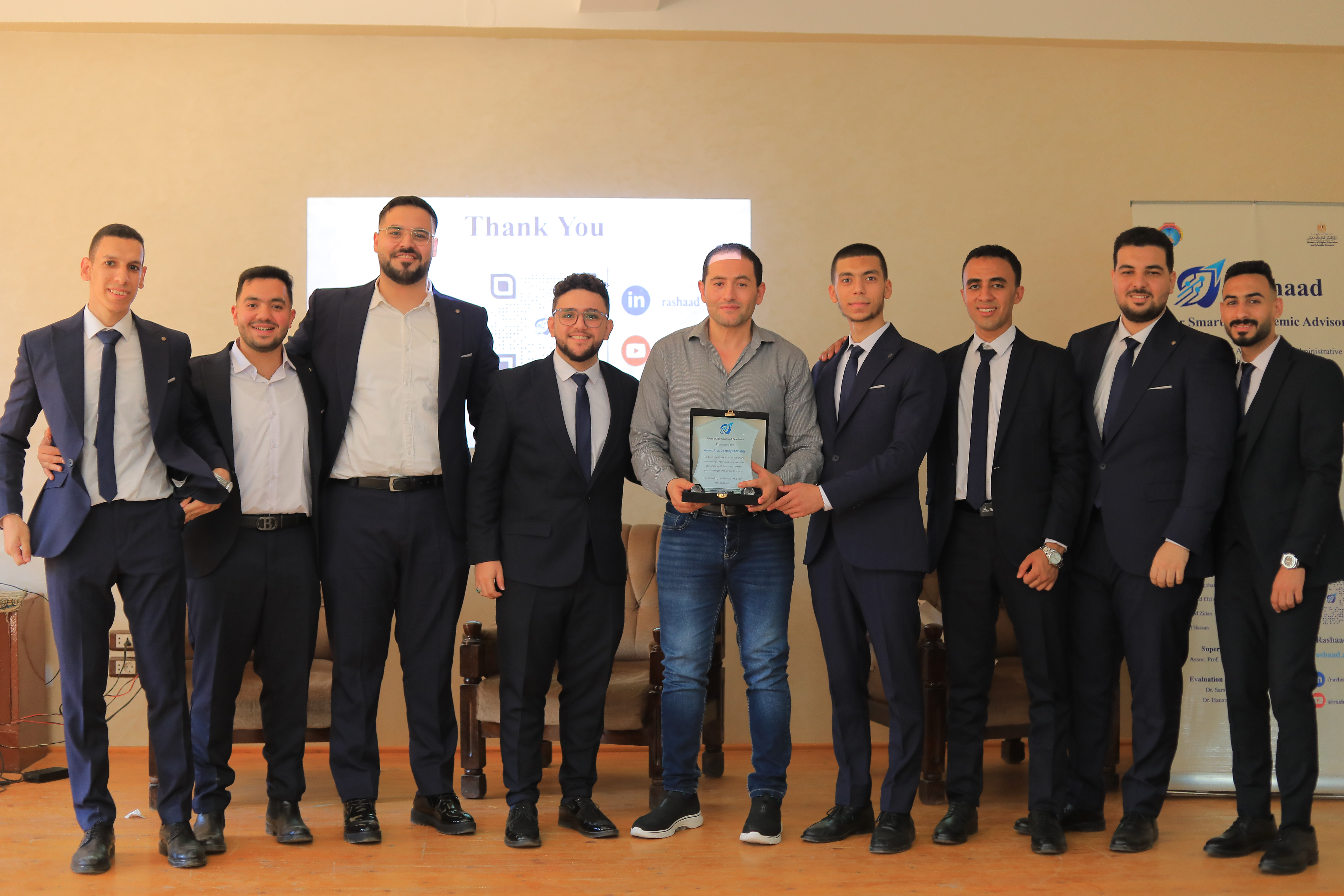
Winning the praise of our respected supervisor, Prof. Hany El-Ghaish, during our graduation defense was more than just an academic milestone—it was the validation of a 9-month journey spent solving one of the most frustrating bottlenecks in higher education.
University credit-hour systems and complex regulations often create an information vacuum. Students struggle to navigate academic policies, frequently ending up with conflicting advice that can cost them quarters, semesters, or even tank their GPA.
I knew this pain firsthand. Early in my college career, academic confusion dropped my GPA to 1.5. That setback became my primary catalyst: I resolved to build an intelligent, authoritative AI system that ensures no student ever loses their way again.
Together with my incredible team—AI Innovators Team—we engineered Rashaad: a multi-tenant AI Academic Advisor SaaS designed for higher education institutions.
The Operational Challenge in Higher Education
Universities face a recurring operational nightmare during registration seasons:
- Student Affairs Overload: Administrative staff are bombarded with thousands of repetitive policy questions regarding prerequisites, credit limits, and graduation requirements.
- The Hallucination Risk: Generic AI chatbots (like off-the-shelf LLMs) are inherently unsuitable for official university policies. A single hallucinated prerequisite or credit calculation can ruin a student’s academic plan.
Rashaad was engineered to eliminate hallucinations entirely, providing 100% verifiably accurate answers derived exclusively from official university regulations—available 24/7 in the student's native dialect.
Under the Hood: The RAG Fusion Architecture
To guarantee zero hallucination and context preservation, I designed and implemented an Advanced RAG Fusion Pipeline backed by PostgreSQL with pgvector.
System Architecture at a Glance:
- Official Bylaws: Input university regulations & policies.
- 1. Ingestion Pipeline: Multi-Format Parsing & Hierarchical Chunking (Parent/Child).
- 2. Retrieval & Fusion: Dense Semantic + BM25 + RRF + Cross-Encoder Re-ranking.
- 3. Generation Engine: Gemini 2.5 Flash for low-latency, bilingual responses.
1. The Ingestion Pipeline & Hierarchical Chunking
Standard chunking approaches often strip away context, causing LLMs to misinterpret nested policy clauses. We implemented Hierarchical Chunking (Parent/Child Chunks):
- Parent Chunks: Maintain the broader policy context (e.g., an entire academic regulation section).
- Child Chunks: Granular, highly specific sub-clauses used for pinpoint vector search.
When a query matches a child chunk, the system retrieves its parent chunk, handing the LLM full contextual integrity.
2. The Retrieval & Re-ranking Pipeline
Rashaad uses a Hybrid Search strategy to combine the best of keyword precision and semantic comprehension:
- Dense Retriever: Vector similarity search using semantic embeddings for intent understanding.
- Sparse Retriever (BM25): Precise keyword matching for specific course codes, policy numbers, and acronyms.
- Reciprocal Rank Fusion (RRF): Fuses and normalizes scores from both search strategies.
- Cross-Encoder Re-ranker: Re-evaluates the fused results to rank the top-k chunks by strict relevance before presenting them to the model.
3. Model Orchestration & Generation
We selected Google Gemini 2.5 Flash integrated via robust prompt engineering. While our architecture is model-agnostic, Gemini 2.5 Flash delivered the optimal balance for production deployment:
- Ultra-low latency for real-time conversational UX.
- Bilingual proficiency (Arabic & English), naturally understanding colloquial Egyptian Arabic queries while citing formal academic texts.
From Academic Project to Multi-Tenant SaaS
Rashaad isn't just a prototype—it was architected as an enterprise Multi-Tenant SaaS. Each university instance operates with complete data isolation, customized knowledge bases, and tailored administrative controls.
Special Acknowledgments
This breakthrough would not have been possible without the guidance of Prof. Hany El-Ghaish, and the dedication of my team members: Belal Karam, Ahmed Elkholy, Mohamed Zidan, Ahmed Shedid, Hisham Rehab, Abdulrhman Galal Eldaly, and Mohamed Gamal.
What’s Next?
We are currently expanding Rashaad into a full-scale platform with cross-platform mobile support and seamless integration into University Management Systems across the MENA region.
Check out the video walkthrough below to see Rashaad in action!